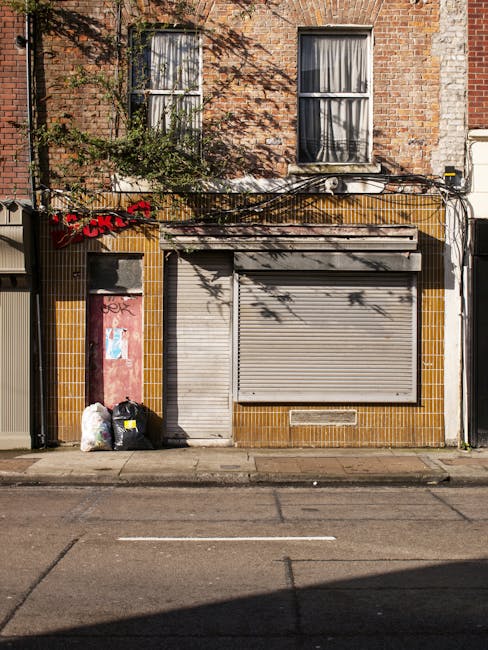
Portobello Road rubbish removal guide for Notting Hill W11

If you live, work, or manage a property near Portobello Road, rubbish can build up faster than you expect. One delivery turns into broken packaging. A flat clear-out turns into a hallway full of mixed items. A shop refit leaves awkward waste that nobody wants to keep moving around. This Portobello Road rubbish removal guide for Notting Hill W11 is here to make the whole thing feel simpler, calmer, and far less messy.
Truth be told, rubbish removal in this part of West London is rarely just about "taking things away". It is about narrow streets, busy footfall, shared entrances, parking pressure, and sorting items properly so you do not create a bigger problem later. In this guide, you will find practical steps, common mistakes, realistic options, and a clear way to decide what makes sense for your situation.
Whether you need a one-off collection, a full property clearance, or support with bulky waste, the aim is the same: get it done quickly, safely, and without turning your day upside down.
Why Portobello Road rubbish removal guide for Notting Hill W11 Matters
Portobello Road is not a typical stretch of London where you can just wheel everything outside and hope for the best. It is lively, tightly packed, and often busy from early morning to late evening. That means rubbish left in the wrong place can get in the way fast. It can also look untidy, attract complaints, and create avoidable safety risks for neighbours, customers, and passers-by.
For residents, the problem is often domestic clutter: old furniture, loft boxes, bags of mixed waste, broken appliances, or the sort of items that have been "waiting to be sorted" for months. For businesses, the pressures are different. Shops, cafes, studios, and offices may need regular waste removal around trading hours, with minimal disruption and careful handling of packaging, fixtures, or confidential material.
There is also the practical reality of space. Notting Hill homes are often compact, stair access can be awkward, and communal entrances do not forgive sloppy planning. One badly timed pile of rubbish in a hallway can cause more trouble than the waste itself. So this is not only about cleanliness. It is about flow, access, and keeping life moving.
Key point: good rubbish removal is less about brute force and more about good judgement. What should go, what can be reused, what needs special handling, and what should be removed first? That order matters.
Table of Contents
- Why Portobello Road rubbish removal guide for Notting Hill W11 Matters
- How Portobello Road rubbish removal guide for Notting Hill W11 Works
- Key Benefits and Practical Advantages
- Who This Is For and When It Makes Sense
- Step-by-Step Guidance
- Expert Tips for Better Results
- Common Mistakes to Avoid
- Tools, Resources and Recommendations
- Law, Compliance, Standards, or Best Practice
- Options, Methods, or Comparison Table
- Case Study or Real-World Example
- Practical Checklist
- Conclusion
- Frequently Asked Questions
How Portobello Road rubbish removal guide for Notting Hill W11 Works
In simple terms, rubbish removal in the Portobello Road area usually follows a short sequence: assess the load, sort the waste, choose the right collection method, and arrange responsible disposal or recycling. The details change depending on whether you are clearing a flat, a shop, a basement, a loft, or a garden.
A professional collection is usually the easiest option when you have mixed items, limited parking, or heavy objects that are difficult to move safely. A skip can work for some projects, but in busy streets it is not always the neatest or most practical choice. A self-tipped load may suit very small jobs if you already have transport and the right help, but many people discover the hard way that "small" becomes "surprisingly heavy" after the first trip.
In the real world, the process often looks like this:
- You identify the waste type and quantity.
- You separate reusable items from true rubbish.
- You note access issues such as stairs, loading space, or lift restrictions.
- You decide whether you need one-off clearance, ongoing waste removal, or specialist disposal.
- You book the collection and make sure the area is ready for safe removal.
If your waste includes bulky furniture, white goods, or fragile mixed items, it helps to choose a service that can deal with more than one category in a single visit. For example, a mix of old chairs, a mattress, and a fridge is easier to manage when the collection team is prepared for all three. Services such as furniture disposal and fridge and appliance removal can be especially useful in that kind of scenario.
For larger clear-outs, you may also need a broader solution. A full home clearance or flat clearance tends to be more efficient than trying to move things piecemeal over several weekends. And let's be honest, most people do not want a month-long relationship with a pile of old boxes.
Key Benefits and Practical Advantages
The most obvious benefit is time. Clearing rubbish yourself takes longer than people expect, especially once transport, loading, disposal, and multiple trips are involved. A planned collection compresses that effort into a single organised job.
There are other benefits too:
- Less stress: you do not have to coordinate lifting, parking, and disposal on your own.
- Safer handling: bulky or sharp items are moved with proper care.
- Cleaner presentation: useful for landlords, letting agents, and business premises.
- Better sorting: recyclable or reusable materials are easier to separate when everything is handled in one go.
- Reduced clutter: a clearer space often makes the next decision easier, whether that is refurbishing, selling, or simply breathing again.
In the Portobello Road and W11 context, there is also a local advantage: professional rubbish removal helps avoid awkward disruptions in shared buildings and busy streets. That matters more than people think. A tidy, efficient collection protects relationships with neighbours and building managers. It saves those slightly tense conversations that nobody enjoys on a Friday afternoon.
Another practical upside is flexibility. If you only have a few heavy items, a simple collection may be enough. If the job has snowballed into a full property clearance, you can scale up without needing to rethink the whole plan.
Who This Is For and When It Makes Sense
This guide is useful for a lot of different people. In fact, it is probably more relevant than you first think.
You may need rubbish removal near Portobello Road if you are:
- a tenant moving out of a flat and leaving bulky unwanted items behind
- a landlord preparing a property for new occupants
- a homeowner tackling years of accumulated clutter
- a shop owner removing packaging, display items, or old stock
- a property manager dealing with waste after maintenance or works
- a family clearing a loft, garage, or spare room
- a business owner who wants a clean, organised back-of-house area
It also makes sense when the waste is awkward rather than huge. A single fridge, a cracked sofa, a bed base, or mixed renovation debris can be more annoying than a full room of uniform waste because it is harder to move, sort, and dispose of. One large item on a narrow staircase can turn into a mini-project very quickly.
If your job involves business premises, you may want a more structured arrangement through business waste removal. If it is linked to work done on the property, then builders waste clearance may be the better fit. Different waste, different approach. Simple as that.
And if the job is really about sorting a whole place out rather than just removing a pile of rubbish, then broader services such as house clearance, office clearance, or loft clearance can save a great deal of time.
Step-by-Step Guidance
If you want the process to go smoothly, a little preparation helps a lot. Not a huge amount. Just enough to avoid surprises.
- Walk through the space slowly. Make a note of what needs to go, what might be donated or reused, and what needs special handling.
- Separate hazardous or restricted items. Paint, chemicals, certain batteries, and similar materials should never be left in with general rubbish. If you are unsure, use a specialist route such as hazardous waste disposal.
- Measure large items and check access. A sofa that looks manageable in the room can become a different story on a tight staircase.
- Decide whether you need a single collection or a broader clearance. If the waste is part of a bigger declutter, think in terms of the whole job rather than one bag at a time.
- Check timing. Portobello Road can be busy, so early planning is worth it. Morning access is often easier than trying to squeeze a job into the most crowded part of the day.
- Prepare the area. Keep pathways clear, move small loose items into one spot, and make sure anything staying behind is clearly separated.
- Confirm how disposal and recycling will be handled. Responsible removal should not just mean "gone". It should also mean sorted properly where possible.
A useful habit is to create three simple piles: keep, remove, and unsure. The "unsure" pile is where people get stuck. If that happens, take a breath and be pragmatic. If an item has not been used in years and no longer fits the space, it is probably doing little more than renting emotional square footage.
For households clearing multiple rooms, services like furniture clearance and mattress and sofa disposal are often the most direct route. For gardens, meanwhile, garden clearance can be the cleanest way to deal with branches, soil bags, damaged planters, and old outdoor clutter.
Expert Tips for Better Results
Here are the small things that usually make the biggest difference.
- Group items by type. Even a rough sort saves time at collection.
- Keep a clear path to the exit. That one chair in the hallway always seems to appear at the worst possible moment.
- Book before the pile becomes urgent. Once waste blocks a room or landing, the job feels bigger and more stressful.
- Be realistic about lifting. If something is too awkward for one person, do not force it.
- Think beyond disposal. Some items may be suitable for reuse, donation, or separate handling.
- Ask about recycling and sorting. A good removal process should not treat every item the same way.
One small but important tip: if you are in a flat with shared access, let neighbours know when heavy items are being moved. Not because you need permission for everything, but because a bit of courtesy goes a long way in blocks where sound carries and doors close loudly at the best of times.
If you want to keep things orderly over time, it can also help to align your clearance habits with broader waste management guidance. The page on waste removal is useful as a general reference point, while recycling and sustainability is worth considering if you care about reducing what goes straight to disposal.
Common Mistakes to Avoid
Most rubbish removal problems are not dramatic. They are usually the result of a few avoidable mistakes that snowball.
- Leaving it too late. Deadlines are what turn clutter into a crisis.
- Mixing everything together. That makes sorting slower and can create issues with specialist items.
- Ignoring access constraints. Narrow stairwells, parked cars, and lift rules matter more than people expect.
- Underestimating weight. Old furniture and mixed household waste are often heavier than they look.
- Assuming all waste can be treated the same. It cannot. Some items need special care.
- Choosing the wrong service for the job. A simple bin bag collection is not the same as a full property clearance.
Another classic mistake is forgetting that "maybe useful later" is not the same as useful now. Portobello Road flats, especially, tend to reward ruthless honesty. Space is too valuable to keep items on standby indefinitely.
If documents or sensitive material are involved, use a proper route such as confidential shredding rather than putting paper waste into general bags. It is a small detail, but it matters.
Tools, Resources and Recommendations
You do not need a van full of equipment to get organised, but a few simple tools help.
- strong bin bags for lighter mixed waste
- gloves for handling dusty or awkward items
- a torch for lofts, cellars, or dim corners
- measuring tape for bulky furniture and appliance widths
- labels or tape for marking keep/remove piles
- a notebook or phone list for prioritising items
For some households, the most useful "tool" is a decision rule. For example: if you have not used it in 12 months, it is damaged, and you do not actively plan to repair it, it probably belongs in the remove pile. Not a law, just a decent filter.
Where there is furniture involved, the service pages for furniture clearance and furniture disposal are practical reference points. For items that require special handling, the dedicated pages for mattress and sofa disposal and fridge and appliance removal can help you think through the right route before the collection day arrives.
If the job is a bigger life admin reset rather than one-off rubbish, broader services such as home clearance, house clearance, and flat clearance are often the most sensible starting point.
Law, Compliance, Standards, or Best Practice
Waste handling in the UK is shaped by legal duties, local rules, and common-sense best practice. You do not need to become a compliance expert to manage your rubbish properly, but you should know the basics.
First, waste should be handled responsibly and not fly-tipped, mixed carelessly, or left where it can create a nuisance or safety risk. That sounds obvious, but it is exactly where people get into trouble. Second, some waste types need specialist treatment. Batteries, certain electrical items, chemicals, and contaminated materials should not be treated like ordinary household rubbish.
If you are clearing a business premises, you should also think carefully about record-keeping, confidentiality, and duty of care. Even a small office can generate waste that should be separated from general rubbish. For that reason, office clearance and business waste removal are often more appropriate than a generic approach.
There are also practical standards that matter even when nobody is inspecting the job. Safe lifting, proper sorting, sensible access planning, and clear communication all reduce risk. On the provider side, it is worth checking that safety and insurance are taken seriously. Pages such as insurance and safety and health and safety policy signal the kind of operational care you should expect from a serious service.
If you are looking at pricing, remember that the cheapest quote is not automatically the best value. Clarity matters. Ask what is included, how access issues are handled, and whether items are sorted for reuse or recycling where appropriate. A straightforward quote usually beats a vague bargain that grows teeth later.
Options, Methods, or Comparison Table
Different waste jobs call for different approaches. Here is a simple comparison to help you decide.
| Method | Best for | Strengths | Limitations |
|---|---|---|---|
| Professional rubbish removal | Mixed waste, bulky items, limited access | Fast, flexible, less lifting, usually easiest in busy areas | Needs scheduling and a clear brief |
| Skip hire | Projects with steady waste over time | Useful for ongoing DIY or building work | Space, permits, and street access can be an issue |
| Self-haul | Very small loads with transport already available | Can suit light jobs with simple access | Time-consuming, physically demanding, multiple trips |
| Specialist disposal | Appliances, hazardous waste, confidential items | Better handling for restricted materials | Not suitable for mixed general rubbish |
In Portobello Road and wider W11, professional collection is often the most practical choice because of the local environment. Busy streets and awkward parking can make other methods more trouble than they are worth. That said, the right option depends on your waste type, timeline, and how much space you have.
If you are still deciding whether a skip would work better than a collection, the page on what can go in a skip is a useful reference for thinking through the contents. It may save you from booking the wrong thing, which is an annoying mistake but very fixable.
Case Study or Real-World Example
A typical Portobello Road job might involve a two-bedroom flat above a shop. The residents have moved out, but the place still contains an old wardrobe, a sofa, a broken washing machine, bags of mixed clothing, and several boxes of general clutter from the airing cupboard and loft hatch. There is also a narrow stairwell and a tight loading area outside.
In that kind of situation, the first win is not the lifting. It is the plan. The items are grouped into furniture, appliance, and bagged waste. Anything fragile is separated. The hallway is cleared so the collection team is not weaving around shoes, coats, and half-open bags. The washing machine is handled as a specialist item, the sofa is removed separately, and the rest goes in a mixed load that can be dealt with efficiently.
What usually surprises people is how much calmer the process feels once the decision is made. The room looks larger immediately. The smell of dust and old cardboard disappears. Sound changes too; a room that was full of "stuff" suddenly feels quieter. That may sound sentimental, but if you have ever stood in an empty flat after a clear-out, you will know exactly what I mean.
For a business example, think of a small shop near the market finishing a refit. There may be display fixtures, damaged shelving, cardboard, and packaging to remove. A structured collection keeps the front of house tidy and avoids the kind of overflow that frustrates neighbours and customers. That is where a service like builders waste clearance can also come into play if the project has left debris behind.
Practical Checklist
Use this before booking or collecting anything.
- Have I identified everything that needs to go?
- Have I separated keep, remove, and unsure items?
- Are there any hazardous, confidential, or specialist items?
- Do I know whether the job is domestic, commercial, or mixed?
- Have I checked stairs, lifts, parking, and access restrictions?
- Are bulky items measured or at least roughly checked for fit?
- Is the collection area clear and safe to move through?
- Do I want recycling or reuse to be considered where possible?
- Is this a one-off clearance or part of a larger declutter?
- Have I picked the most suitable service for the waste type?
One more thing: if the rubbish is tied to a big life change, like moving out, downsizing, or handling an inherited property, build in a bit of emotional breathing room. These jobs are practical, yes, but they can be oddly draining too. No need to rush every decision.
For general planning and service expectations, it may also help to review pricing and quotes and payment and security so you know what to ask and what to confirm before anything starts.
Get a free quote today and see how much you can save.
Conclusion
Rubbish removal on and around Portobello Road is at its best when it feels unremarkable. That is the goal, really. No stress, no clutter hanging around for days, no awkward lifting, and no uncertainty about where everything should go. With a bit of planning, the right type of clearance, and a sensible approach to sorting, even a messy job becomes manageable.
The big takeaway is this: do not treat every rubbish job the same. A single bulky item, a flat clearance, a business waste job, and a hazardous item all need different thinking. Once you match the waste to the right method, the whole process becomes clearer and usually quicker too.
If you are dealing with clutter in W11 right now, start with the access, the item types, and the scale of the job. The rest tends to fall into place. And once the space is clear, it really does feel lighter. Not just tidier. Lighter.
Frequently Asked Questions
What is the best way to arrange rubbish removal near Portobello Road?
The best approach depends on the waste type and access. For mixed, bulky, or awkward items, a professional collection is often the simplest option because it reduces lifting and saves time.
Can I put furniture and general rubbish in the same collection?
Often yes, but it depends on the service and the type of items involved. Mixed loads are common, especially during flat clear-outs, though bulky furniture may need to be separated for easier handling.
Do I need special disposal for fridges, freezers, or other appliances?
Yes, appliances are usually better handled separately. Items such as fridges and freezers need proper treatment, so a dedicated appliance removal route is usually the safest choice.
What should I do with hazardous or restricted waste?
Do not mix it with ordinary rubbish. Hazardous items should be identified first and handled through the appropriate disposal route, especially if they involve chemicals, batteries, or contamination.
Is a skip better than rubbish removal for W11 properties?
Sometimes, but not always. Skips work well for ongoing projects, yet in busy streets or tight-access buildings, a collection can be far more practical and less disruptive.
How do I prepare a flat for rubbish collection?
Clear access routes, group items by type, separate anything sensitive or hazardous, and make sure the collection area is easy to reach. A little preparation makes a surprising difference.
Can rubbish removal help with a full house or loft clearance?
Yes. In fact, larger clear-outs are often easier to manage when treated as a full clearance rather than a series of small, disconnected tasks.
What if I only have one or two bulky items?
That is still worth arranging properly. A sofa, mattress, or appliance can be awkward enough to justify a dedicated collection, especially if stairs or narrow access are involved.
How do I know if I need business waste removal?
If the waste comes from a shop, office, studio, or other commercial setting, a business-specific service is usually the better fit. It is especially useful when waste is generated regularly or includes non-domestic material.
Can rubbish removal be done quietly and with minimal disruption?
Yes, with good planning. Early scheduling, clear access, and a properly prepared collection area all help reduce disruption, which is particularly important in busy parts of Notting Hill.
What should I ask before booking a clearance?
Ask what is included, how access is handled, whether different waste types can be taken together, and how recycling or specialist disposal will be managed. Clear answers are a good sign.
Why is compliance important for rubbish removal?
Because waste has to be handled responsibly. Proper sorting, safe lifting, and correct disposal protect people, property, and the local area. It is not glamorous, but it matters a lot.