
Health and Safety Policy for Flat Clearance Notting Hill
The following Health and Safety Policy applies to all flat clearance and rubbish removal activities undertaken by the company. Our objective is to protect employees, contractors, visitors and the public by reducing the risk of injury, ill health and environmental harm during house and flat clearance operations. This policy sets out responsibilities, operational standards and controls that apply across our service area and to all waste removal, clearance and disposal tasks.
 This statement is maintained as a formal legal and operational record. It recognises that effective flat clearance procedures, safe rubbish handling and appropriate training are essential to delivering reliable and safe clearance services. Managers must ensure that risk assessments are carried out for each site, that safe systems of work are implemented, and that all staff follow established procedures.
All employees and contractors must be familiar with the principles contained in this policy. Responsibilities include: identifying risks, reporting hazards, wearing appropriate personal protective equipment (PPE) and following safe manual handling techniques. The senior management team commits to providing resources for training, suitable equipment and support to maintain a safe working environment for every rubbish clearance job.
 Risk assessment is central to our approach. Before any flat clearance or rubbish removal task begins, a competent person will carry out a site-specific assessment to identify hazards such as sharp objects, asbestos risks, biohazards, electrical hazards, unstable fixtures, vermin or hazardous liquids. Assessments will determine control measures, PPE requirements and any need for specialist disposal routes.
Safe Work Practices and Controls
Our operational controls include the following minimum standards:- Pre-clearance checks: site access, structural safety and identification of hazardous materials;
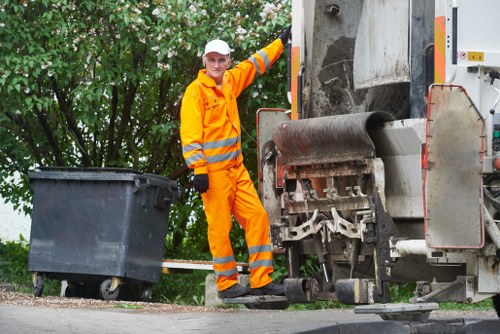
- PPE: gloves, safety boots, high visibility clothing, eye protection and respiratory protection where required;
- Manual handling: use of team lifts, trolleys and mechanical aids to reduce strain and musculoskeletal injury;
- Waste segregation: separate general rubbish, recyclable materials and hazardous waste for compliant disposal;
- Vehicle safety: safe loading, securing of loads and adherence to road safety regulations during rubbish removal;
- Site protection: floor and corridor protection in communal properties and minimising disruption to neighbours.
Training, Competence and Supervision
Employees will receive training appropriate to their role in flat clearance, including manual handling, PPE use, hazardous waste awareness and safe operation of equipment. Training records will be kept up to date and refresher sessions scheduled. Supervisors are responsible for ensuring that all staff operate within the risk control measures and that any deviations are reported and corrected promptly.Supervision also includes monitoring welfare provisions: rest breaks, hydration and protection against extremes of weather where outdoor handling or multi-drop rubbish collection is involved. Competence assessments will be used to confirm that individuals are able to perform tasks safely before they undertake unsupervised work.
 Incident reporting and investigation are essential components of continual improvement. All accidents, near misses and health incidents must be reported immediately and recorded. Investigations will establish root causes and whether additional controls or retraining are required. Findings will be communicated to the team and documented in management reviews.
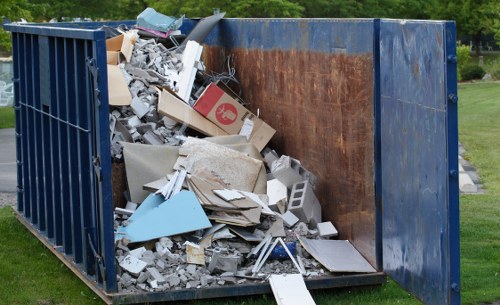 Waste management and compliance obligations: the policy places strong emphasis on legal and environmental responsibilities. All waste removed during flat clearance will be handled in accordance with current waste regulations and transported to authorised facilities. Hazardous materials will be identified, segregated and disposed of by licensed contractors when necessary, and appropriate documentation maintained.
Contractor and visitor safety must be managed. Contractors working on site must provide evidence of their own health and safety arrangements and cooperate with on-site risk controls. Visitors must be accompanied and briefed on relevant hazards and safe routes while on premises.
Monitoring, review and continuous improvement: This policy will be reviewed annually, or sooner if there are significant changes to legislation, operations or following a major incident. Audits will be conducted to verify compliance with this policy and to identify opportunities for improvement. The organisation is committed to learning from experience and promoting a positive safety culture across all flat clearance and rubbish services.
By adhering to the principles in this policy, we aim to deliver reliable, safe and compliant clearance services across our service area. Employees are expected to take personal responsibility for health and safety, to cooperate with procedures and to seek clarification when unsure. Strong leadership, clear systems and ongoing training will ensure that rubbish removal, flat clearance and associated operations are completed safely, with due care for people and the environment.
The policy is supported by detailed procedures, risk assessments and training materials that are available internally to staff and relevant contractors. It forms part of our legal commitment to provide a safe workplace and to reduce the potential for harm arising from clearance and rubbish handling activities.
Signed by senior management and endorsed as company policy for all flat clearance and rubbish removal services. This document is a living policy and will be updated to reflect changes in best practice and regulatory requirements.